Education for the laboratory
Plain-language reference material for researchers working with lyophilized peptides. For educational purposes only.
What is a peptide?
Start with the tiny stuff
Everything alive is built from tiny parts called cells, and cells are built from even tinier building blocks called amino acids. There are 20 kinds. Think of them as 20 different colors of LEGO bricks.
Now snap some together
Think of it like this: letters make words, and words make chapters. Amino acids are the letters. A peptide is a short word. A protein is a long chapter.
In plain English: a peptide is a short chain of amino acids hooked together, like a string of beads where every bead is one amino acid. Scientists usually say a chain of about 2 to 50 beads is a peptide. Longer than that, and it is called a protein.
A simple example: snap two LEGO bricks together and you have a tiny peptide. Snap on more bricks and the chain gets longer. That is all it is.
The order matters
The words LISTEN and SILENT use the exact same letters, but they mean different things. Peptides work the same way. Put the same beads in a different order and you get a different peptide. A red brick then a blue brick is not the same build as a blue brick then a red brick.
The shape matters too
A real peptide does not stay a straight line. It curls up like a coiled phone cord. That shape lets it fit with other things, the way a key fits a lock. A key with one wrong notch will not turn the lock.
How cells send messages
Think of it like this: the electrical panel in a house. Wires run from the panel out to every room, and flipping a switch sends a message that says “turn on.”
Cells talk to each other with messages in a similar way. A peptide can work like a tiny message: it travels to a cell, fits into a spot on the cell’s surface like a key in a lock, and that can flip a switch inside the cell. Scientists in laboratories study these messages in dishes to learn which switch gets flipped and what the cell does next.
Where the picture breaks down: a real cell is far more complicated than a house, with thousands of switches that all affect each other. This is a picture to help you imagine how messages work. It is not a description of what any peptide does in a living thing.
Why labs are picky
If you want to learn what one message does, you have to be sure you are sending the right message. Think of texting a friend: one wrong letter and the text might say something else. In the same way, a lab needs to know exactly which chain it has in the vial, because a single wrong bead can change which lock it fits.
The big idea: peptides are short chains of building blocks. The order and the shape decide what they are. Researchers study them in the laboratory to understand how cells send and receive messages.
How peptides are made
Think of it like this: stringing beads onto a thread by following a pattern card, one bead at a time, in exactly the right order.
In plain English: chemists build a peptide one amino acid at a time. The first amino acid is anchored to a tiny resin bead, like a clothespin holding the end of a string on a line. Then the next amino acid is added, the extra material is washed away, and the step is repeated until the chain is as long as the pattern says. At the end the finished chain is cut free from the clothespin and cleaned up. Chemists call this method solid-phase synthesis.
Why the clean-up matters: now and then a bead gets skipped, or a chain stops early, like a necklace that is missing a bead. Those “wrong necklaces” are called impurities, which is why laboratories test what is in a vial instead of just trusting the label.
What “freeze-dried” means
Think of it like this: frost disappearing from a cold, dry window without ever turning into puddles. The ice goes straight into the air.
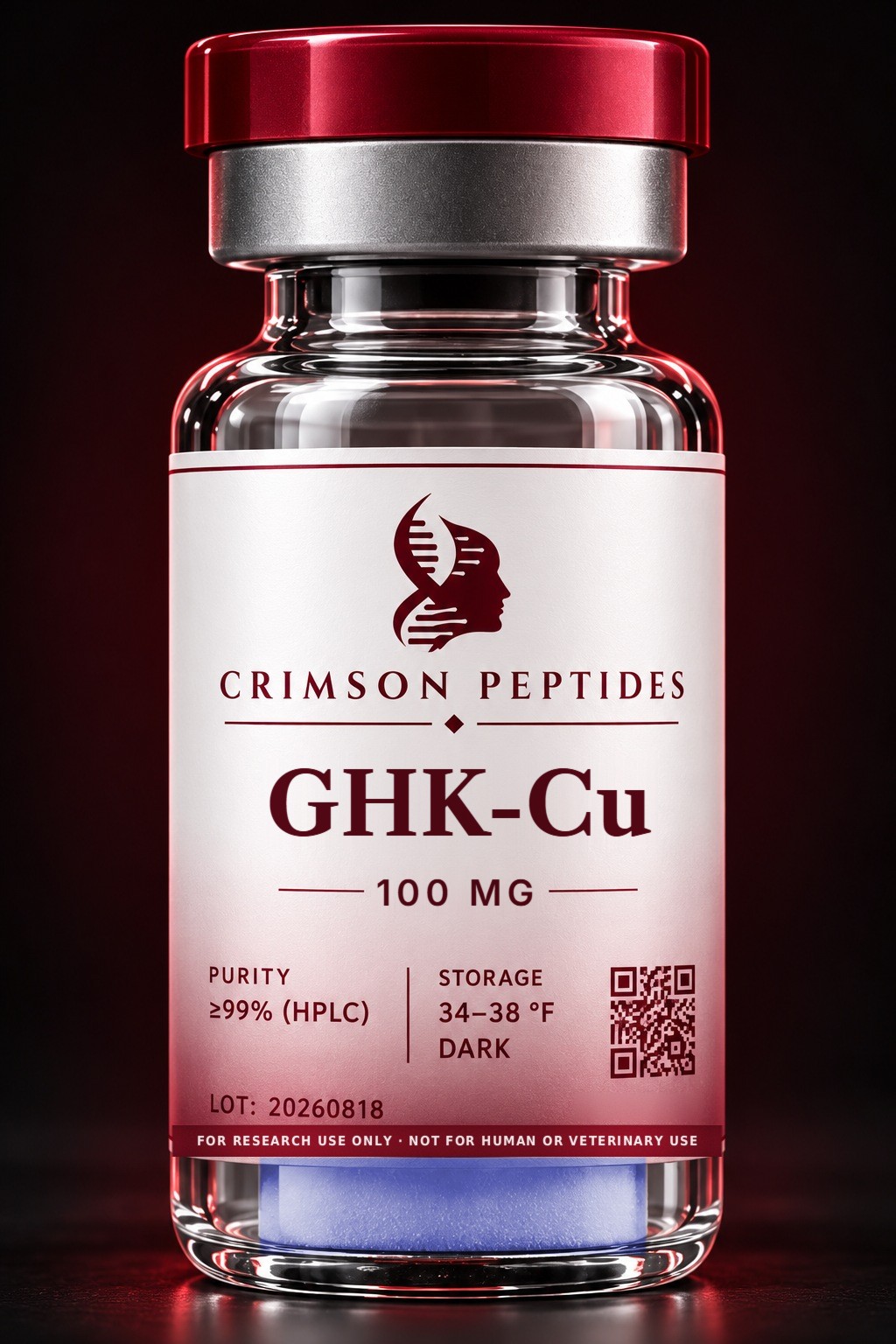
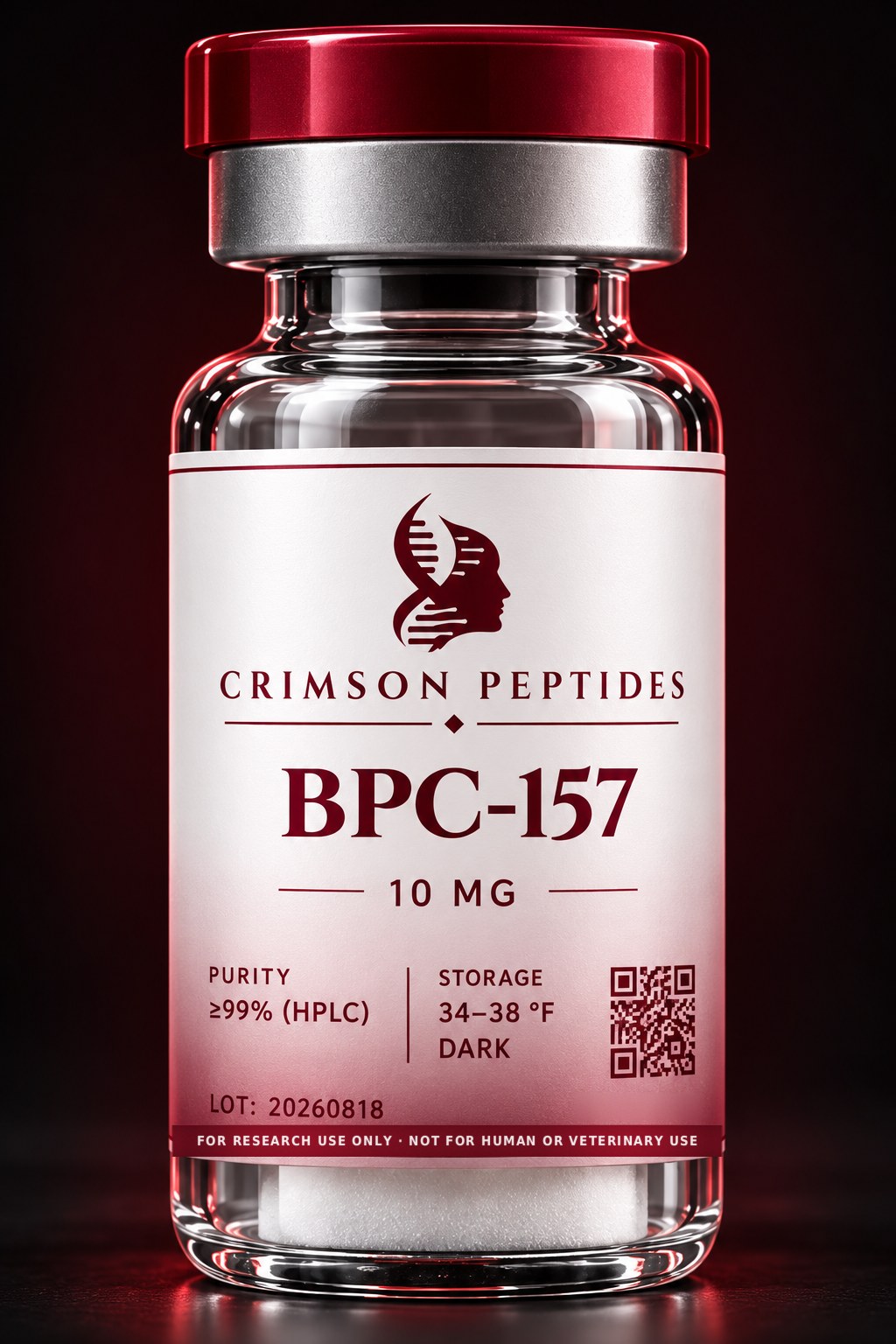
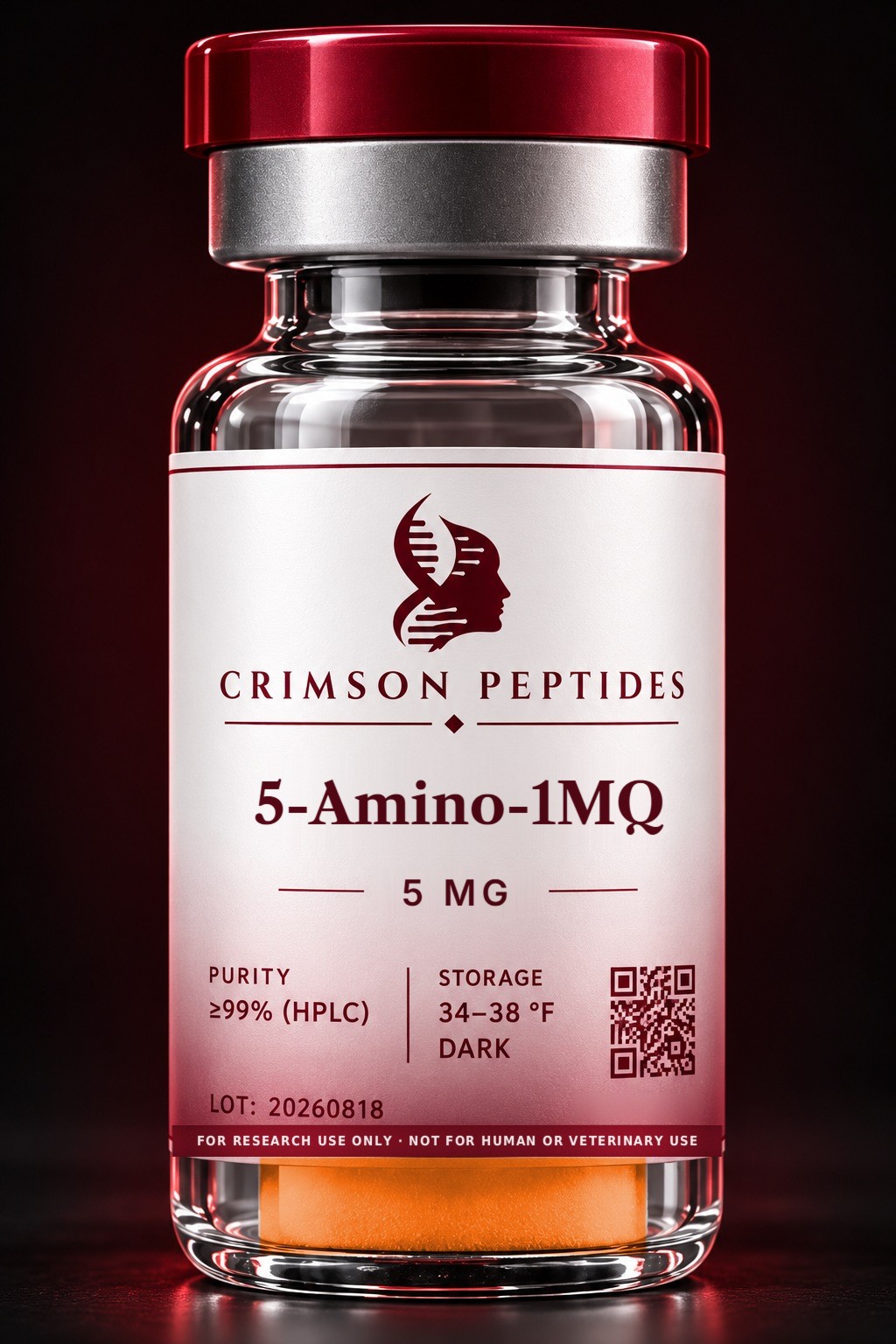
In plain English: freeze-drying, which chemists call lyophilization, works in two steps. The material is frozen solid, then placed under a vacuum so the ice turns directly into vapor without melting. What is left behind is a dry, light powder, often a small white cake at the bottom of the vial.
Why do it: water is what makes peptide chains break down over time. Taking the water out is like putting the chain in a long time-out, which is why freeze-dried material keeps so much better than the same material in liquid.
Storage & handling
Think of it like this: astronaut ice cream. It stays crisp for a long time while the pouch is sealed, and it turns soggy fast once air and moisture get in. Freeze-dried peptide powder works the same way.
In plain English: peptides arrive as a dry powder. Their three enemies are heat, water and light, so storage is just keeping those three away from the vial.
- Keep it cold. Cold slows things down, like milk in the fridge. Store sealed vials in a freezer, typically around −20°C, or however your own lab protocol says.
- Keep it dry. Think of a bag of chips: crunchy while it is sealed, stale once it is open. Leave the vial sealed, and a little desiccant packet helps.
- Keep it dark. Like a poster that fades in a sunny window, light can wear peptides down. Keep vials in their box.
- Let it warm up before you open it. A cold soda on a hot day grows water droplets on the outside. A cold vial does the same thing to the powder if you open it too soon, so let it reach room temperature while it is still sealed.
- Do not freeze and thaw it again and again. Ice cream that melts and refreezes turns icy and gross. Peptides do not like the back and forth either.
- Write it down. Label leftovers with the date and you always know what you have. Do the same with the lot number and the date you received each vial.
One more thing: every peptide is a little different, like every food has its own storage rules. Follow your own lab’s procedures and any paperwork that came with the specific material.
From a dish to a person: the evidence ladder
Think of it like this: a restaurant test kitchen. A new recipe is tried by one cook long before any customer is served, and most ideas never leave the test kitchen.
Step 1: in vitro (“in glass”). Cells or molecules in a dish. This is tasting a spoonful in the test kitchen.
Step 2: preclinical (animal studies). A whole living animal. This is a small trial dinner for the staff.
Step 3: clinical trials (people). Carefully designed, closely monitored studies reviewed by regulators. This is opening night, and it is the hardest step to reach.
Why this matters: when you read that something was “studied in a dish” or “studied in mice,” that is an early step, not a finished answer. What happens in a dish often does not carry over to an animal, and what happens in an animal often does not carry over to a person.
Where we fit: the materials Furtiva Labs supplies are for laboratory research use only. They are not a substitute for any of these steps and are not for use in people or animals.
What “research use only” means
Think of it like this: the label on a can of paint thinner. It tells you what the can is for and, just as important, what it is not for.
- It is for laboratory research. The materials are supplied for in vitro and laboratory work by qualified people.
- It is not a medicine, food, supplement or cosmetic. It has not been evaluated by the FDA for any use.
- It is not for people or animals. Not for human or veterinary use, consumption, injection or any therapeutic use.
- The buyer is responsible. That means confirming you are a qualified researcher and that your purchase and work follow the law where you are.
- We cannot give guidance on use. That is part of what “research use only” means.
You confirm these points when you enter the site and again at checkout. Read the full Research Use Disclaimer and Terms of Service.
Glossary
- Amino acid: one of 20 building blocks, a single bead.
- Sequence: the order of the beads. Same beads in a different order is a different molecule.
- Peptide: a short chain of amino acids, a short word.
- Protein: a long chain, a chapter.
- Lyophilized: freeze-dried to a dry powder.
- In vitro: in a dish or test tube, not in a living thing.
- Preclinical: studied in cells or animals, before any human studies.
- Receptor: a lock on the outside of a cell that a matching key can fit.
- HPLC: a machine that sorts a sample so you can see how pure it is.
- Mass spectrometry: a very fine scale for molecules, used to check identity.
- Lot number: the ID of one batch, like a date stamp on a carton of eggs.
For educational purposes only. This page is general science education, not instructions or guidance for any use. Materials supplied by Furtiva Labs are for in vitro and laboratory research use only. Not for human or veterinary use.